Slow the F*** Down
The art of exposure, failure, and the beauty of uncertainty

Photo: Antonia Grove
Dark Clown with Peta Lily was everything I hoped it would be and more. I have always been attracted to the dark side of theatre and play. I was reminded that I am not afraid to go to more challenging emotional states within a well facilitated environment. I found the more extreme explorations deeply exhilarating and I look forward to revisiting these places again soon.
I wanted my writing, however, to focus on what happens in the liveness of navigating improvisation.
Something that keeps appearing for me is the discrepancy around speed of processing language versus movement. I have recently become more curious, through the learning and development of my children, about differences in cognitive processing; how individuals interpret, integrate, and respond to information, and whether this is hard-wired or malleable.
I am aware that my success as a dance and physical theatre performer/practitioner has been in large down to an innate physical intelligence that I can remember always being there, and which grew into the ability to read and respond to energy (of other performers and my audience). My relationship with words, as a language of communication, has always lagged a little behind and affected my confidence to articulate verbally. Thoughts in the head finding tangible cohesion and translating to words in space.
Years of movement training and exploration delayed any real confrontation with that disparity, deepening instead my articulation and sensitivity within the body.
The question is, why speak if your power lies in moving?
As a lecturer across different arts settings I notice this challenge, in dance students specifically, when finding their voice. This is partly shaped by a culture of silence embedded within dance training environments, but also, I think, because for more introverted creatures, dance offers an attractive platform for the body to speak where other forms of communication might be challenging.
My younger self would have welcomed more encouragement to learn, practise, and fail in the search for verbal language. The challenge being that words seem so definite, so binary, so easily misread and held to account. Movement for me, by contrast, holds texture and nuance; it allows for interpretation, for blending and smudging, for shifting meaning even after delivery. It can read its audience and subtly recalibrate its purpose.
I have never felt that same elasticity or power within the spoken word, but other people have told me they do so I understand these feelings exist in reverse for many people. Only a couple weeks ago I received a lovely email from a dance dramaturg and researcher who, in response to a previous blog, explained how for them words and language flow freely in a way dance and movement do not, and the tension this creates for them.
So what is the connection between speed of processing and the Dark Clown course I attended?
Peta named my physical speed almost instantly. “Why’s she in such a hurry?”
It landed comfortably. I gentle reminder that when I solve problems quickly through movement, and my body is performing with competence, I am not fully in the moment. My brain is still arriving. I can feel the disconnect, and it’s a little irritating. Keep up brain.
I am familiar enough with my tendencies at 46 to identify that my speed can be a defence, a smokescreen, standing in the way of being seen and preventing me from fully listening and absorbing. It’s a nervous habit. As a dancer I was very good at moving and shifting at speed, doing something quite impressive maybe, whipping up energy like a tornado and then holding complete calm or stillness. I loved how satisfying it was to me and the audience, both the storm and the calm.
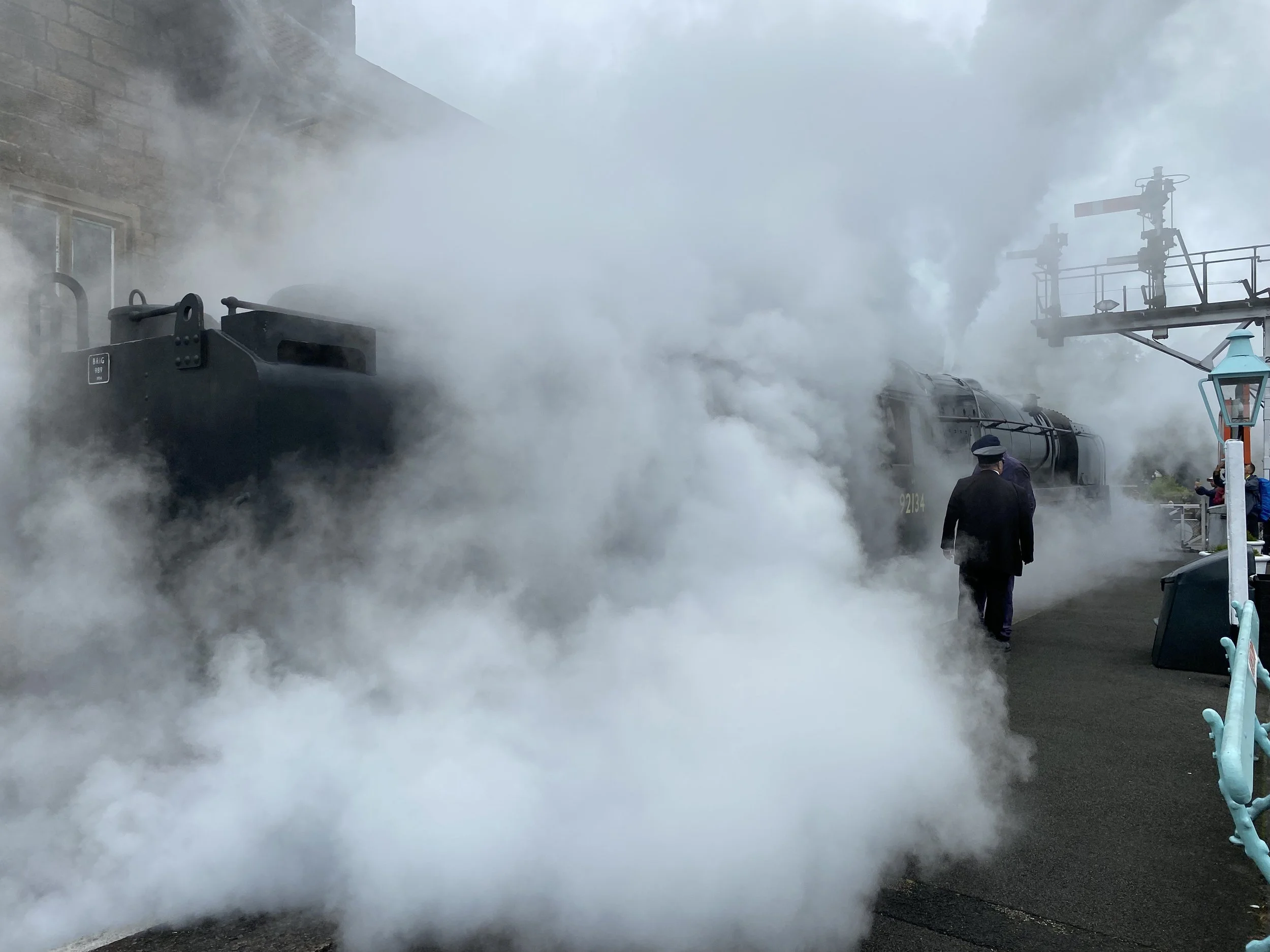
Photo: Antonia Grove
Early on in my career people often commented on how easy I made things look. I learnt that this wasn’t always a good thing. I was a skilled dancer, but to communicate with the sensitivity and humanity I desired might mean making the effort more explicit, or increasing the level of difficulty to expose some flaws. This became a challenge throughout my performance career. Small Talk played a lot with exposing these edges, and not everyone liked that (or maybe I hadn’t quite got the balance right). I remember one dance critic saying something about me ‘flailing about’ and not displaying the skills I once had, or something of the sort!
“Why’s she in such a hurry?” It was a cheeky and gentle prompt to slow my physicality down, allow my brain to catch up, read the room and let the room see and read me. That’s the clown. Interestingly it reminded me of watching my eldest son play football- he will make quick intelligent decisions when he sees possibility, sometimes it works and it’s magic, but more often than not he’s releasing the ball before his teammates have time to read the situation. Take a deeper breath, sense the shift around you, connect.
I am new to clown but as a performer I recognise the need to pause and look out at my audience. No-one had ever dissected the mechanics of ‘how’ I was looking. Peta was able to call me out for side glancing, which made me reflect on how I often lead with my eyes rather than turning my head. When a side glance might exude cynicism, a direct turn of the head is more open and inviting. I think I have made half a career on side-glancing!
What I rediscovered was that when you stop to look, really look, absurdity emerges and sharpness lands. Slowing down allows the body time to discover and reveal something the intellect didn't already know. This also provides space to show something about the uncertainty inside the thought. In improvised performance you can feel when you allow the audience to meet you, and you to meet them, something more combustible happens.
In contrast, moving quickly in my creative health work signals attentiveness and a care-attuned response. Working in socially engaged settings, especially trauma-informed ones, when the facilitator’s role is to stabilise the space, speed can represent hypervigilance and the ability to listen and pre-empt an escalation. The practice is to be responsive, attuned, adaptive and able to shift focus quickly when needed. If something awkward emerges, you might acknowledge and reframe it. If the room destabilises, you gently recalibrate. Moving quickly-emotionally and intellectually-can read as emotional literacy, competence, and ultimately safety.
Dark Clown often asks the opposite: Don’t fix it. Don’t solve it. Stay inside the wobble.
Slowing down demands a different kind of courage: exposure, failure, the grotesque, uncertainty and staying with awkwardness.
It’s not a loss of ability or about abandoning skill but choosing when to use it or not.
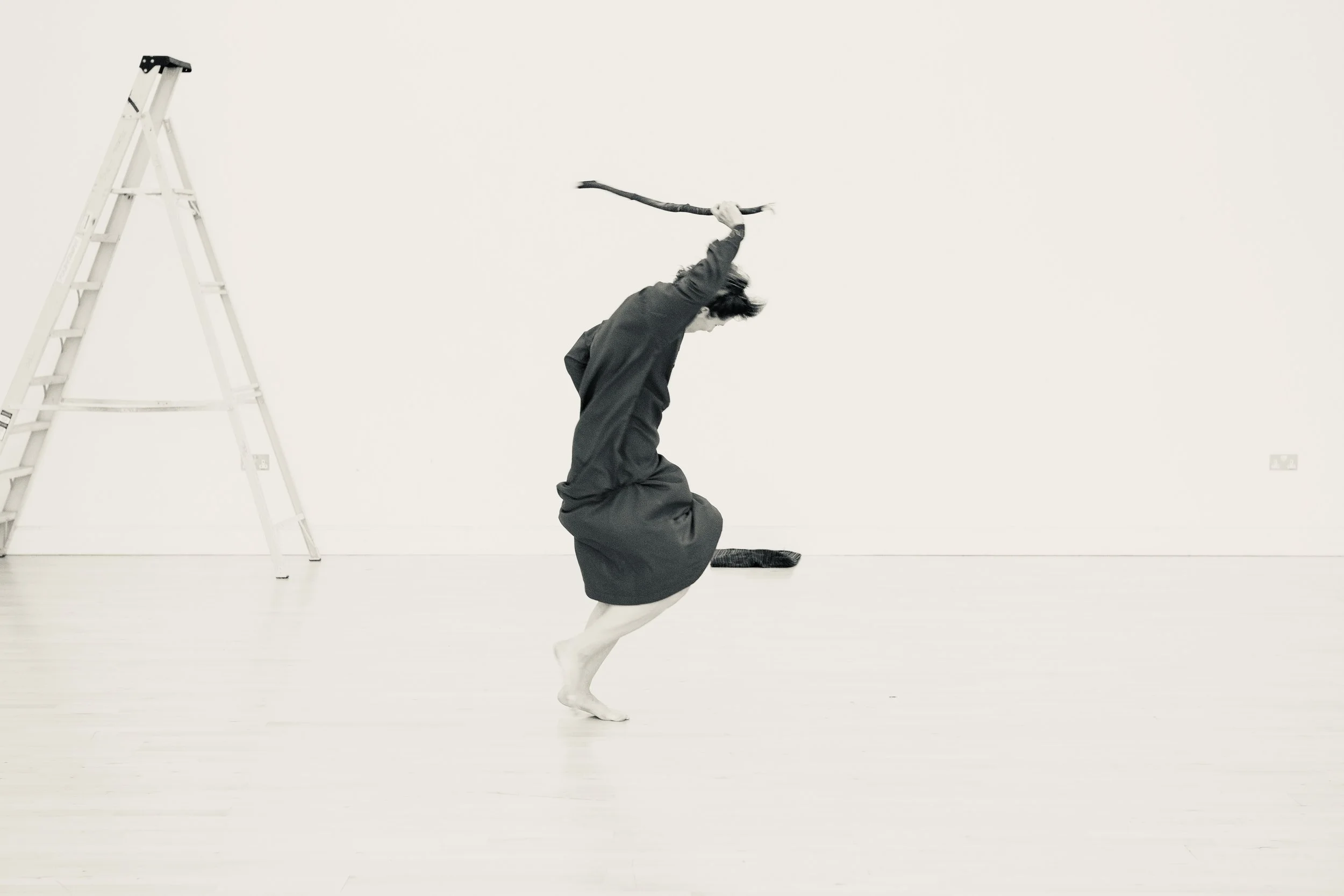
Photo: Zoe Manders
I can’t recommend Peta Lily’s courses enough… if you are lucky to get on one. Sign up here for her mailing list and to book early.
