Looking Back at Being Looked At
Permission, visibility and renegotiating performance through a mid-career body
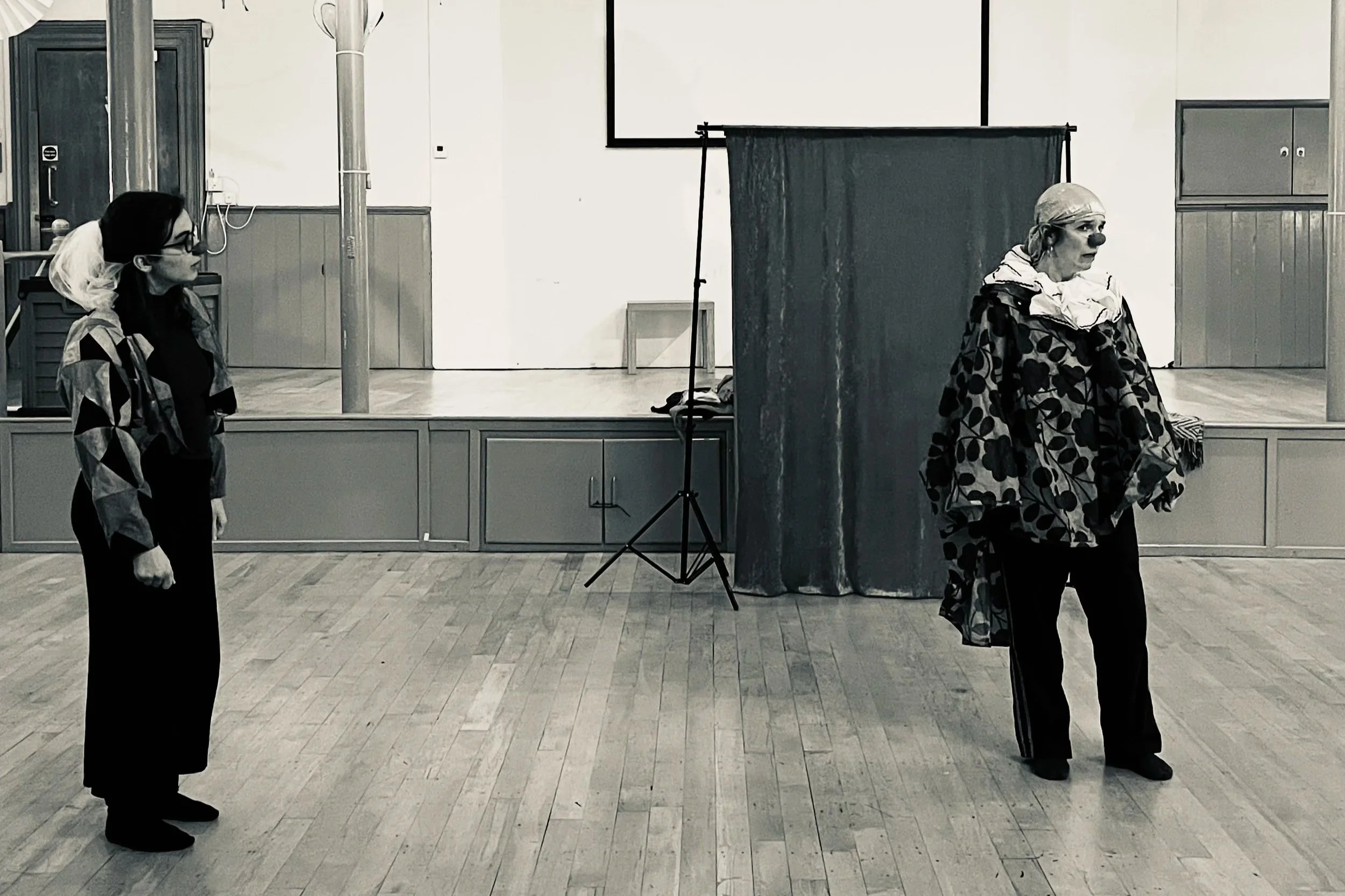
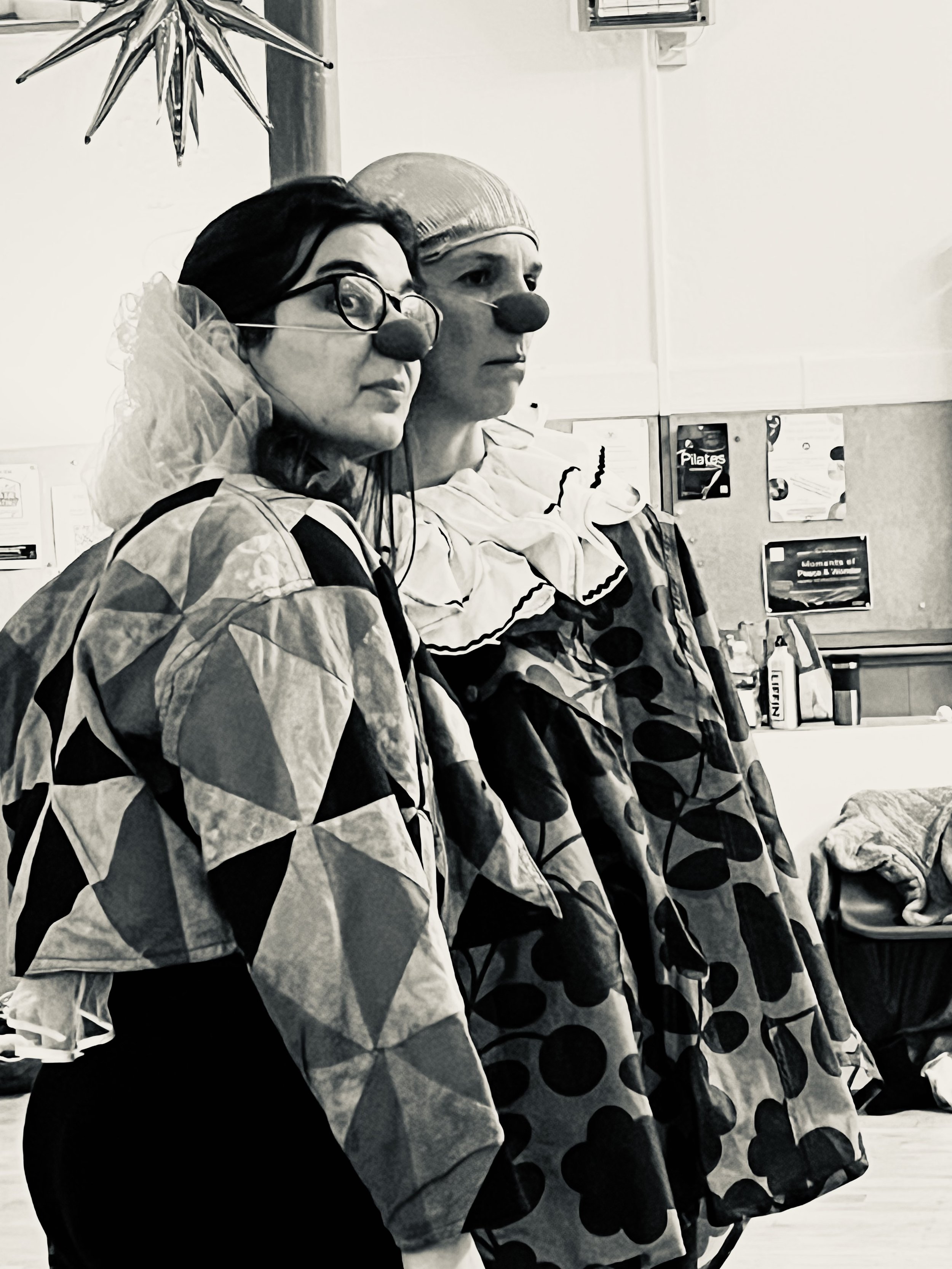
Louise and I. Photo: Lauen Silver
A few weeks ago I attended a ‘Clown Foundations’ course at Bristol Clown School. It was a beautifully crafted introductory course with a generous group of metaphorical misfits (myself included), directed by Robyn Hambrook. It marked my first step towards rediscovering play and returning to a more performative, improvised space.
As I’ve written about in previous blogs, I am on a journey- supported by a DYCP grant from Arts Council England- that I originally thought was about challenging myself to explore stand-up comedy, feeding back into my solo practice and pushing me out of my comfort zone (a massive understatement). Since beginning this journey, my practice has shifted towards more physically-led languages that explore humour alongside a wider emotional range.
Quiet Questions Beneath the Practice
Alongside the practical motivations, quieter and more personal questions have been hovering: Do I still have something compelling to offer as a performer? What will it feel like to drop into that performative register again? Is that something I still want to do? And if so, why am I not doing it? It’s complicated — and I’m curious.
These questions naturally open into broader reflections about what it means to choose visibility again as a mid-career female performer, something many artists quietly navigate. Can I discover ways of communicating through my body that honour who I am now- physically, emotionally, artistically- while still holding presence and power? And what might that power look or feel like outside of the roles, expectations, or histories that have previously defined me? Big questions.
Clowning has been present in much of my work when I look back. Tracing the work I produced and performed for Probe, elements of clowning appeared obliquely in early work commissioned and curated with Theo Clinkard from New Art Club, Jasmeen Godder and, in different ways, Lea Anderson. It surfaces throughout my solo work- in Small Talk, embracing failure and even wearing a clown nose; flickers of it through disguise and visibility in Now You See It; and most recently revisiting wigs and clown nose in my MA research Holy Moly Mother of Chaos. I am familiar with embodying my inner clown and using it to communicate more playfully and directly with an audience, even if not through formally trained or fully conscious practice.
The workshop itself unfolded through games, connection exercises, improvisation, and the constant invitation towards performance. There was a careful sense of progression that allowed play to lead into performative territory almost imperceptibly. I felt deeply grateful to reconnect with myself and others as a participant rather than a facilitator- a role reversal that many of us artist-facilitators struggle to implement.
The Body Remembers. The Pull of Dark Corners.
During the course, I could feel the embodied knowledge and gentle presence of past performative characters creeping in- a reassuring reminder of how the body stores history. It was like having a second personality attempting to make an appearance and cause mischief. During some improvised performance tasks, intuitive responses surfaced, and I trusted those characters to exist somewhere in my unconscious, helping to shape decisions in the moment.
Working with various partners on the course, there were moments of listening and connection that felt effortless, allowing play to expand and challenge. Working with Louise, for example, was like plotting or competing with a twin sister, sharing silliness alongside a conspiratorial energy that made darker provocations feel tempting. When more sinister elements appeared in our games, I felt us entertaining the possibility of chasing those provocations.
Through this connection, I was reminded how much my performative self seeks to disrupt and travel towards darker emotional territories. I miss that aspect of creative working- being in environments where exploring the dark corners feels possible, appropriate, or ‘safe’. It is a familiar conversation across the arts sector, particularly when work and personal lives are shaped by caring responsibilities, and pushing towards creative ‘edges’ becomes an ongoing negotiation, or sometimes simply impossible.
So, what about being looked at?
I realised I was quietly testing how I felt about it, subconsciously gathering evidence through the responses of those watching. Testing the strength of my ability to communicate through languages that make people feel something, relate, reflect, question. I felt a flicker of confidence appear. It felt exciting, and a little dangerous. Perhaps because it has been a while, and because being able to play with your audience holds power. There is always the potential to misuse that power. Not something I would want to do without careful thought, but the possibility exists, and it carries a certain thrill.
I can’t help thinking of all the narcissists, megalomaniacs and egotists in the public eye (or that I have the pleasure of knowing!) getting high on power- the adrenaline is almost palpable. That relationship between performer and audience can be deeply seductive. Perhaps that is part of what unsettles me. Who am I to want even a small piece of that? It has always been a complex tension for me as an introverted person who loves to perform, and a contradiction that many performers, especially dancers, recognise.
Meeting the Edges
At the other end of my experience, I encountered some of my ‘edges’ during the course. Most participants did at some point, and these moments were held with care and sensitivity. Sometimes I managed to push past fear by stepping forward and actively contributing. Other times I wasn’t ready to meet those edges. I find volunteering myself into a circle difficult, as well as presenting myself with instant confidence. Once inside the practice- playing, listening, responding, being with a partner- anxieties soften. The task is to stay immersed in the task and to trust myself to make decisions in the moment. Not perfect decisions, but honest and responsive ones that embrace and expose failure.
A Question of Longevity
But this journey is about something broader than clown practice. My uncertainty around performing is also about understanding who I am as a female performer at 46. What might that look like? I have no desire to recreate or emulate past versions of myself- unless, of course, that becomes the point, which might be an approach worth exploring, and possibly an invitation to fail.
Developing my creative practice may not involve stand-up comedy in the way I first imagined. I don’t think I will ever reach that particular edge, but that feels less like failure and more like clarity. I find myself on an equally fruitful journey into play- one that acknowledges changing strengths, shifting desires, and evolving ways of being visible.
Clown offers a rediscovery of permission. Permission to meet my audience and allow them to see me looking back. Permission to communicate differently. Permission to celebrate the trying, the failing, and those rare, electric moments of brilliance. I wonder if permission is something many of us are quietly searching for.
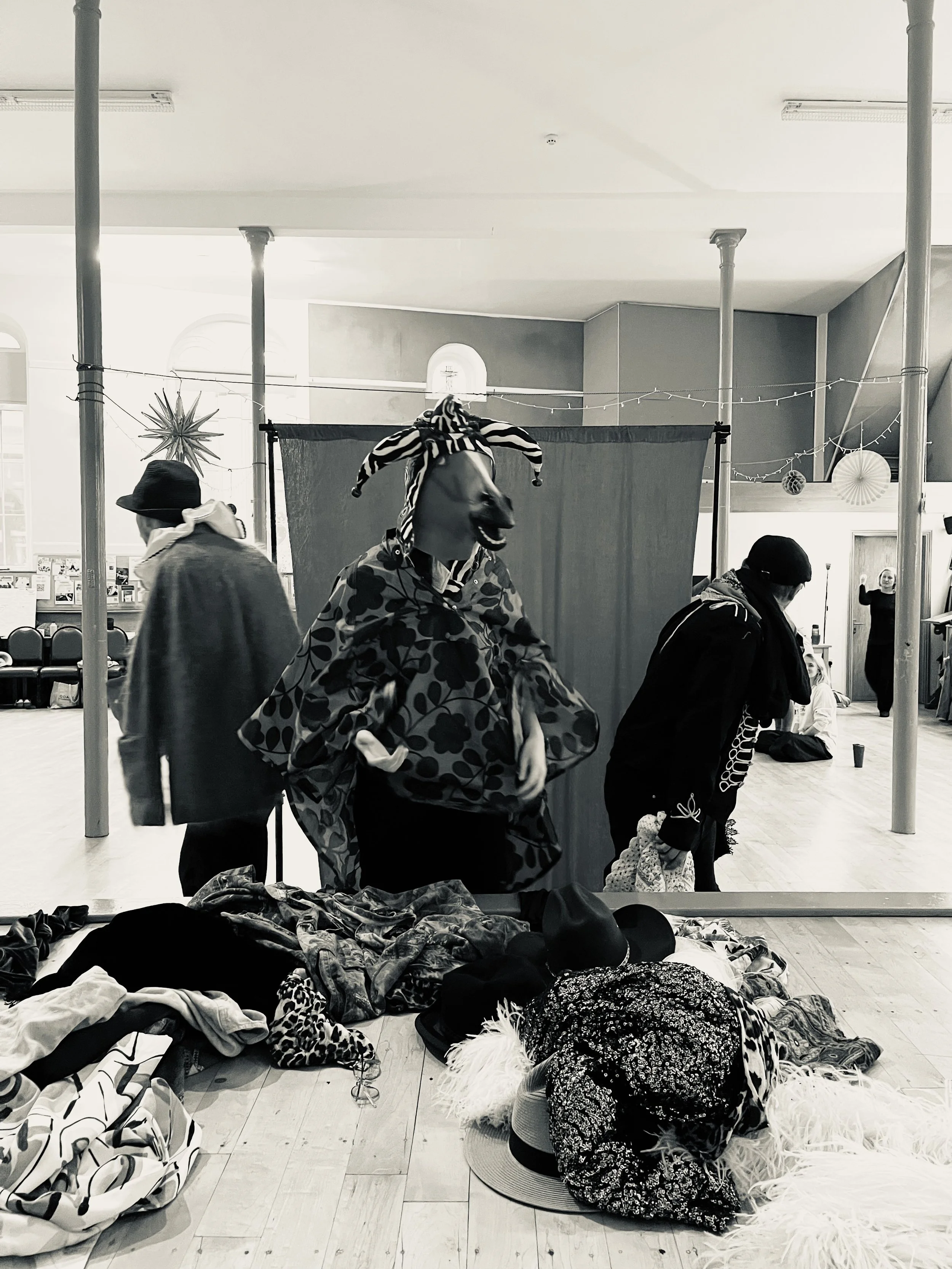
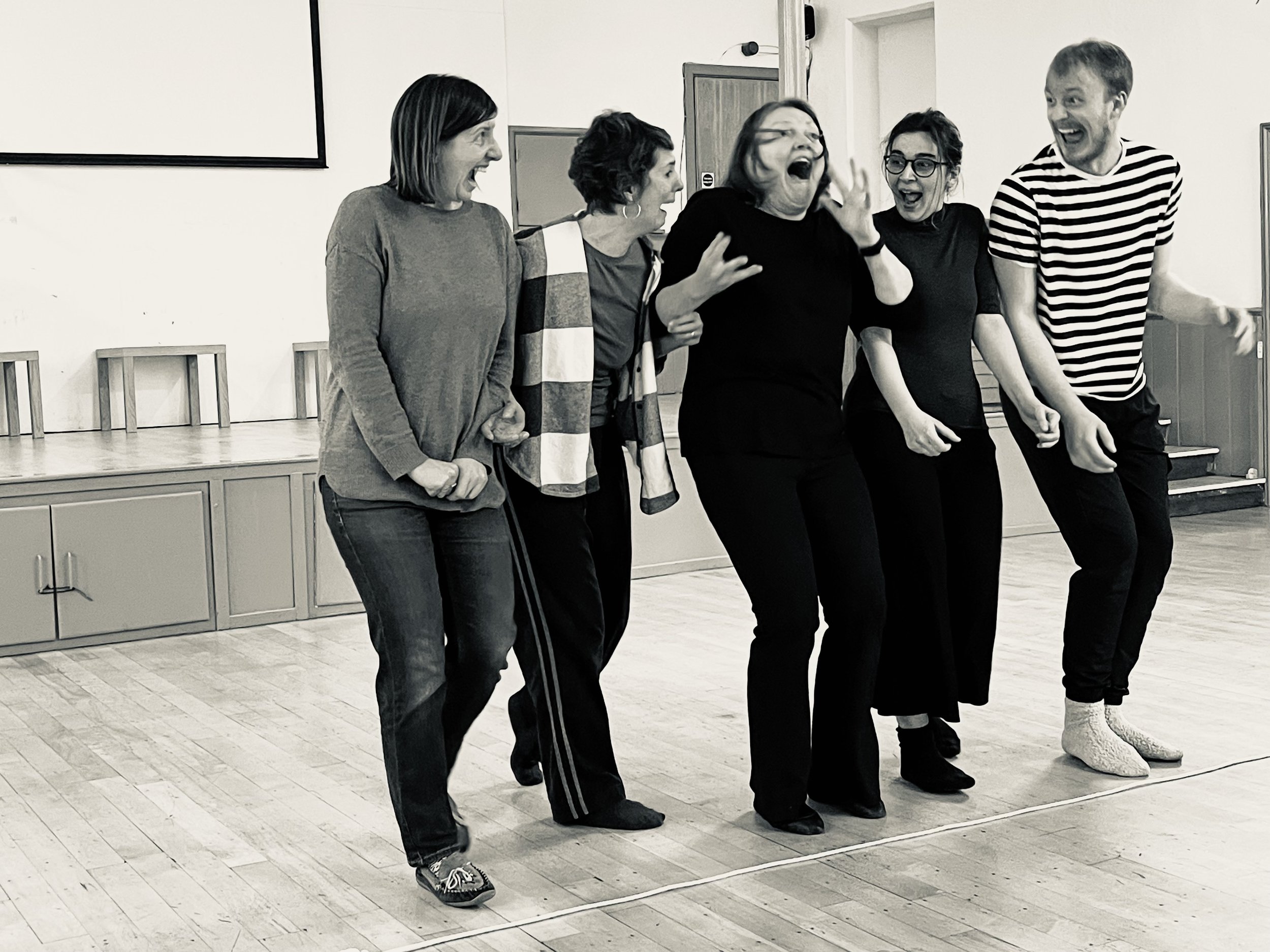
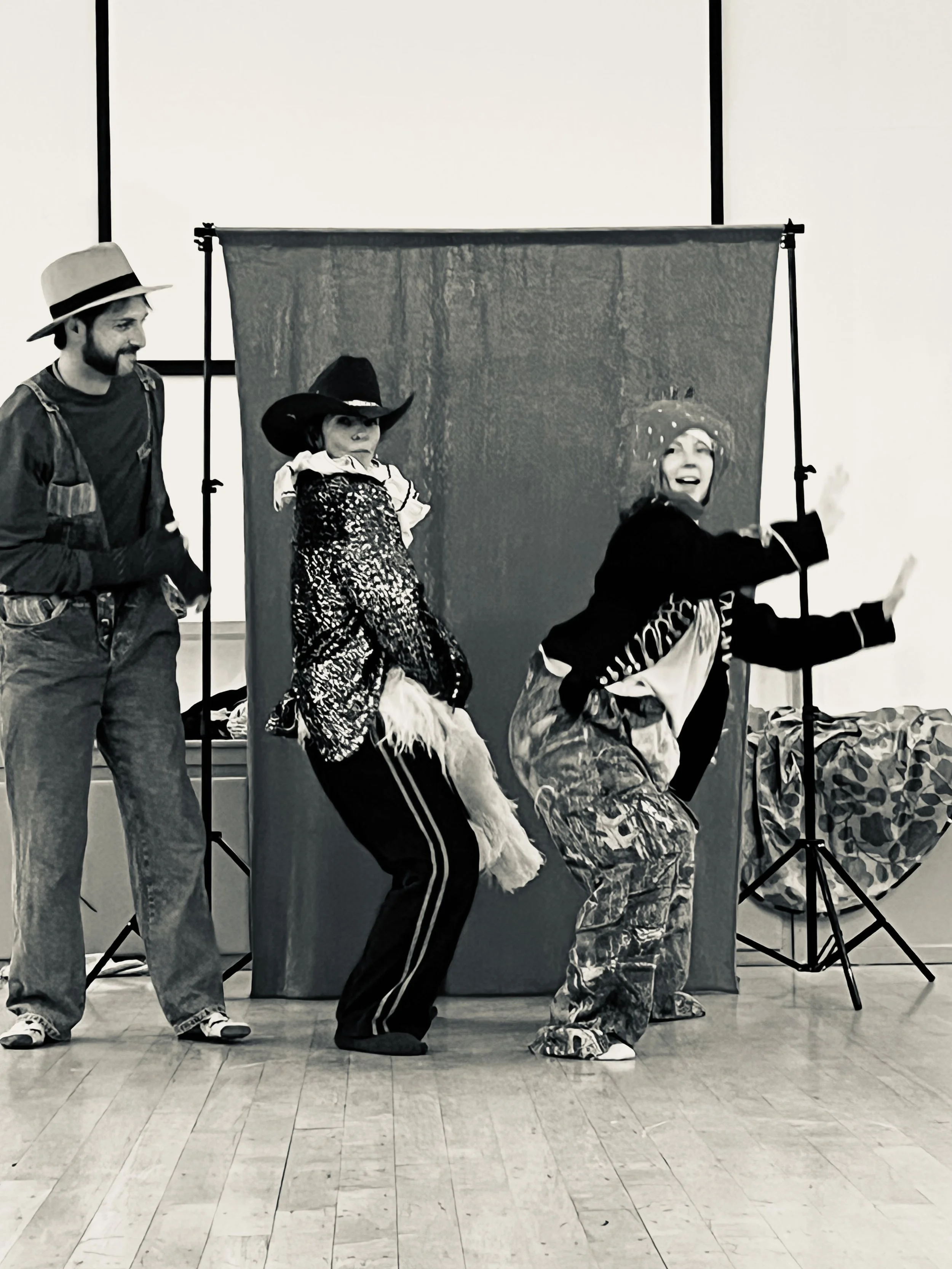
There is a big clown community in Bristol, and I really recommend you look up Bristol Clown School as the workshop programme is fantastic.
Thanks to Director Robyn Hambrook (look up her Clowning and Activism work), the amazing Lauren Silver (Spider Silver) for supporting the workshop, and all the lovely participants I had the pleasure of meeting and playing with (Heidi-Marie, Josh, Amanda, Will, Ben, Kevin, Janet, Han, Jess, Rhi, Heidi, Charlotte, Sofia, Donna, Louise).
